Showing posts with label Court Cases. Show all posts
Showing posts with label Court Cases. Show all posts
Sunday, April 24, 2011
Brown v. Board of Education of Topeka, Kansas
During 1950's the practice of segregation have invaded the public life of Americans and even regarding education. The segregation was legally allowed under the doctrine of "equal but separate."
Not everything changed after the decision of Brown v. Board of Education, but the way schools were run in the South changed. I believe if a society want to change in the long run, education must change and I believe this court case was almost as liberating as the Thirteen Amendment. This was a major step to rejecting discrimination and Plessy v. Ferguson ruling and accepting public equality.

Miller v. California
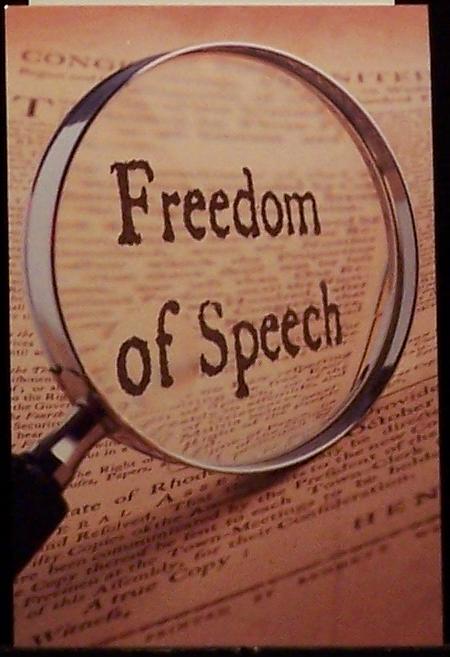
Miller claimed that California's definition of obscenity conflicted the definition of obscenity of the U.S. Supreme Court and that he should be allowed to spread adult materials, because it is allowed by the first Amendment of freedom of speech. He believed that his conviction should be overturned.
Plessy v. Ferguson
 On June 7 of 1892, a 30 year old Homer Plessy was jailed for sitting in the white car of the East Louisiana Railroad as one-eighths black and seven-eighths white person. Under the Louisiana law, Plessy was considered colored and was forced by law to sit in the colored section of the car.
He went to the court and argued that the Separate Car Act was a violation of the Thirteenth and Fourteenth Amendments. The thirteenth abolished the slavery and fourteenth which granted citizen ships for the freed slaves.
The lawyer of the case, John Howard Ferguson was the lawyer who declared the Separate Car Act. This time, he ruled that the state could choose to regulate the railroad companies that operated within Louisiana only. He found Plessy guilty of refusing to leave the white car, then he appealed to the Supreme Court. However, he was found guilty once again because the fourteenth amendment was to give full rights to both white and black races but not to abolish the distinction of two races and the previous law was not established to discriminate either race. I personally found that statement aggravating but funny at the same time. It sounds so hypocritical and ironic. How can a distinction of color of skin can not be discriminating? How can separating them give people equality? Segregation clearly was a continuing discrimination in America.
These links presents summary and more about this case: infoplease, bgsu.edu
The decision allowed segregation as long as they were equal. The doctrine of "separate but equal" took over the public life of Americans in restaurants, theaters, restrooms, and public schools.
However, in 1954, the Brown v. Board of Education decision will strike down the "separate but equal" doctrine.
Tuesday, April 19, 2011
United States v. Nixon
 Watergate scandal was a great national shame. In June of 1972, five burglars were arrested inside the Democratic National Committee's headquarters in the Watergate complex in Washington D.C. It appeared that the five men worked either directly or indirectly for the committee for re-election of president Nixon. However, the president and his campaign leaders denied their connection with the incident, although in 1973, it became clear in the investigation that the top members of Nixon administration were definitely involved. They were involved in a cover-up of the break in and several other illegal actions. Also, it appeared that Nixon installed a taping system which automatically recorded his conversation with his advisers.
A prosecutor demanded to present the tape at the court, but Nixon refused to release them, saying that they were protected under executive privilege. He eventually released some of the tapes after some of the portions were erased. Another prosecutor asked the Supreme Court to compel Nixon to release all of the tapes.
The court ruled unanimously that the president must surrender the tapes. I think that the decision is very fair, considering that the executive branch is a separate branch from the judicial branch. There for, the president has no power over the court and is not an exception from the law.
In the fifth amendment, it says that no person shall be deprived of liberty without due process and the sixth amendment states that every defendant in a criminal trial has the right to be confronted with the witness against him and to have compulsory process for obtaining witness in his favor. The president has no right to turn these away despite his power.
These links present the case in a very simple way: infoplease, 4lawschool
This case is incredible because it showed the clear separation of the executive branch and the judicial branch. Despite the fact that the president is the head of the country, Nixon could not get away from what he did, being a dishonest leader of a country like America. Nixon became the first president in the United States' history to resign from the presidency. Nixon did so to avoid impeachment and conviction of the Senate.
Despite his great foreign policies and relationships, Richard Nixon will be remembered for something else, the most dishonest president of America.
Monday, April 18, 2011
Roe v. Wade, a change of lives.
This is a video that is shown in our government class. This case is not only about whether a fetus' faith is controlled or not, but in the other hand, a woman's right. As a woman myself, I would say that the ruling of the case is rather a very essential to the modern society. The ruling changed the law of the toughest law in the nation regarding abortion of a woman. The striking point is that even if the woman was raped or was a victim of incest, she could not get an abortion in Texas.On January 22th, 1973, abortion was legalized in Texas, allowing women to get abortion during the first three months of their pregnancy.
I believe this was a fair because ever since the law was made, I believe big numbers of women got a second chance after their mistake and living better life. Also, many of the rape and incest victims were now allowed to end unwanted pregnancy caused by a crime. It appears from this link that since 1973 when this law was established, there has been about 39 million abortions since then. Who will take care of all these children? The unprepared parents? Can that addition to the population really be safe to the society? It is hard to admit but in a realistic point of view, I can not help but to say that the legalization of abortion benefited the society as a whole. To add more, a research presented by John Donohue and Steven Levitt shows that the legalization of abortion reduced the crime rate and they said that the unwanted babies lead to crimes in future.
Subscribe to:
Comments (Atom)